
The Origin of Clement Clarke Moore’s “Twas the Night Before Christmas”
From the Preface of Chip Walter’s Book Version of Clement Clark Moore’s Poem
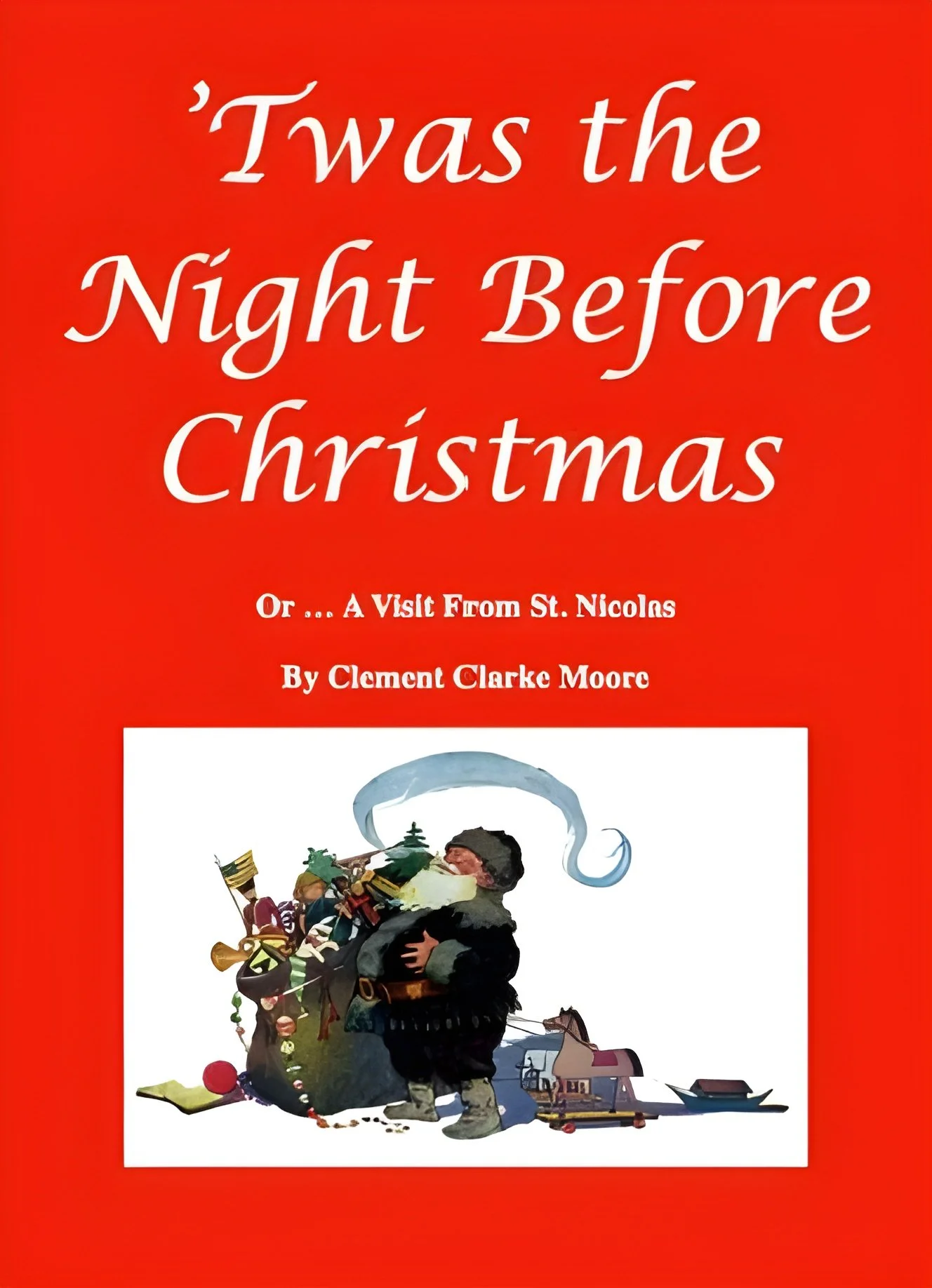
If you would like to view the original book that Houghton Mifflin published 112 years ago, please get your copy from the Vagabond Adventure Store.
A few years ago, I came across a 110-year-old, copyright-free edition of Clement Clarke Moore’s famous poem 'Twas the Night Before Christmas published by Houghton Mifflin. For years the book languished in libraries around the world, but I thought this edition was so beautifully done (And it was the 200th anniversary of poem’s publication), it deserved to be resurrected. It’s the sort of book that recalls a simpler time, which was exactly what Dr. Moore had in mind when he wrote the poem that has been read and memorized for by millions.
Moore supposedly wrote the poem on a snowy winter’s day while he was riding in a sleigh during a shopping trip, probably in 1823. It was later given to a friend and then published anonymously in the Troy, New York Sentinel newspaper two days before Christmas the same year. The poem solidified the American idea of Santa Claus— a jolly elf who arrives in a magic sleigh, dives into chimneys and fills the stockings of all of the world’s children on Christmas Eve. Americans had many different ideas about the holiday in the early 19th century. Moore drew creatively on them all and when he did gave us pretty much the Santa Claus we all know today.
The look of Moore’s elf was inspired by a local Dutch handyman and melded with the Dutch idea of St. Nicholas hauling presents in a wagon pulled by flying reindeer. New York was originally a Dutch colony. He was also influenced by Washington Irving’s A History of New York (1809). In that story St. Nick visits Olof Van Cortlandt (a direct ancestor of Moore’s wife, Catherine) in a dream. He suggests Cortlandt become the founder of New Amsterdam (later New York City). “Lo! the good St. Nicholas came riding over the tops of the trees,” wrote Irving, “in that self-same wagon wherein he brings his yearly presents to children.” There the saint lights his pipe and the swirling smoke that rises from it creates “shadowed out palaces and domes and lofty spires,” that Van Cortlandt takes as a cue to build the settlement that becomes Manhattan. (Olaf’s son Stephanus became the first mayor of New York.) Afterwards St. Nicholas twists his pipe in his hat band, lays his finger beside his nose, rises into his wagon and flies away over the tree tops.
These ideas, mixed with Moore’s affection, humor and mischievous creativity, are the sorts of things that dancing sugar plums are made of.
I made few changes to the original book in this digital edition except for adding a cover from Jessie Willcox Smith lovely artwork. I also rearranged some images so that they fit better on the page and added this foreward. The illustrations that Smith created over a century ago speak for themselves, and so, of course, do the immortal words that Dr. Moore wrote for his six children exactly 202 years ago! “Merry Christmas to all! And to all a goodnight!"
I hope you enjoy it.
Note:
— The reindeer Donder and Blitzen were originally written as Dunder and Blixem, which mean Thunder and Lightning in Dutch.